

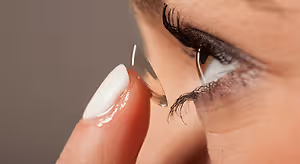
When you step outside on a warm afternoon, the humidity is hard to miss. Contact lens wearers may notice something else by the end of the day: lenses that feel filmy, irritated, or less comfortable than they did that morning.
A current contact lens exam at [tokens name='practice'] can help determine whether the problem comes from your lens fit, material, replacement schedule, tear film, or another eye health concern.
Tips for When Contacts Feel Different
Humidity affects the environment around your eyes, but it doesn't automatically cause more protein buildup on contact lenses. Proteins naturally found in your tears begin interacting with contact lenses soon after you put it in, and the amount and type of buildup can vary by lens material. Modern research points to lens chemistry and surface design as major factors in protein and lipid deposits.
Outdoor conditions can add another layer of irritation. Pollen, dust, smoke, and other airborne particles can affect the eye's surface. Research has linked particulate air pollution with symptoms such as burning, itching, irritation, and dry-eye-related changes.
Watch for Changes in Comfort
Contact lens discomfort can show up in several ways:
- Gritty or scratchy sensations
- Burning or stinging
- Lenses that feel filmy late in the day
- Blurry or fluctuating vision
- Frequent awareness of the lens on your eye
- A need to remove your contacts earlier than usual
If these problems keep returning, don't simply push through another day of uncomfortable wear. Your current lenses may no longer match your eyes or daily routine as well as they once did.
Check Your Replacement Schedule
Replacement schedules matter because reusable lenses need regular cleaning and fresh disinfecting solution.
Daily disposable lenses start with a fresh pair each morning. You may wear reusable lenses again for a set period when you clean, store, and replace them correctly.
Keep Reusable Lenses Clean
Cleaning helps remove deposits and debris from reusable lenses. Use the contact lens solution recommended for your lenses, and never top off old solution in the case with fresh solution.
Wash and dry your hands before handling your lenses. Keep contacts away from tap water, swimming water, and shower water. Good habits support both comfort and eye health.
Simple Ways to Improve Contact Lens Comfort
A few practical habits can make humid, active days easier on your eyes:
- Follow your replacement schedule: Don't stretch daily, biweekly, or monthly lenses past the schedule your optometrist gave you.
- Start with clean, dry hands: Moisture, lotion, dirt, and other residue can transfer to a contact lens.
- Give your eyes a break when needed: Keep an up-to-date pair of glasses available if your eyes become irritated or you need to remove your lenses.
- Schedule an exam when comfort changes: Repeated discomfort deserves a closer look at your prescription, fit, lens material, and eye health.
Persistent burning, watering, redness, or fluctuating vision may also point to dry eye. An evaluation at [tokens name='practice'] can determine if tear film problems are affecting contact lens comfort.
Find a Better Fit With Your Contact Lens Exams
Contact lens technology changes, and your eyes can change too. A prescription that worked well a few years ago may no longer provide the same vision or comfort.
If humid days regularly leave you ready to remove your contacts hours early, schedule a contact lens exam at [tokens name='practice'] for a fresh look at your fit.
Frequently Asked Questions
Are Daily or Monthly Contacts Better for Comfort?
Daily contacts give you a fresh pair each morning, while monthly lenses require regular cleaning and storage. The better choice depends on your prescription, tear film, lens material, and routine.
Why Do My Contacts Feel Dry Later in the Day?
Long wear time, tear film changes, deposits, screen use, and outdoor exposure can all affect comfort. If the problem keeps happening, your lenses may need a closer look.
When Should I Schedule a Contact Lens Fitting?
Schedule a fitting if your lenses feel uncomfortable, your vision changes while wearing them, or your current contacts no longer work as well as they used to.